

These essay questions focus mostly on the present and future, so don’t expect to elaborately portray your professional development as a prelude to your goals. Be guided by Columbia adcom’s focus and give them what they ask for, in aggregate: a vivid sense of engagement; focused career plans; and knowledge of the program and why you need it. Considering the lack of opportunity to discuss past professional achievements and experience, your resume carries all the more weight in the Columbia EMBA application – attend to it accordingly.
Short Answer Question:
What is your immediate post-MBA professional goal? (51 characters maximum)
A factual phrase or bullet will suffice; don’t worry about responding with a whole sentence. Do include function and industry.
1. Through your resume and recommendations, we have a clear sense of your professional path to date. What are your career goals going forward, and how will the Columbia MBA help you achieve them? (100 – 750 words)
You may want to start by discussing your current career situation to set the context, and clarify how the MBA education will enable you to achieve your immediate goals. You can then naturally move on to your future goals sequentially. Give more detail in the roles you plan immediately post-MBA and the several years following; this time frame should comprise the bulk of your goals discussion. Longer-term goals need less detail, but they still should present a clear direction. In describing your goals at any given point, indicate why you are taking that step.
In discussing how the program will benefit you, be specific: identify what skills and knowledge you need, and how the program meets those needs. Refer to specific aspects of the curriculum, structure and/or special features of the program, detailing how they will support you and your goals.
As far as that length guideline, bear in mind that Columbia has always looked for practical discussion about how you’ll realize your goals, not just what they are. It’s unlikely fewer than 400 words or so would give you sufficient space to deliver the substantiating detail. I’d suggest an essay in the 500-750 word range.
2. Columbia Business School’s Executive MBA will challenge you by offering a rigorous academic experience, global exposure through the international seminar, and the opportunity to immediately apply what you learn to your career. How will you approach balancing the demands of the program with your professional and personal life while you are in school? (100 – 500 words)
Discuss the accommodations you will make at work, such as delegating more, adjusting travel schedules, etc. You don’t have to tell them every single thing you can think of – focus on the most significant two or three adjustments.
Also address your personal responsibilities and how you will meet them with this additional demand on your time and energy; even acknowledging that you’ll have less time at the playground with your toddler or mentioning the support of your significant other will show that you’re facing this issue squarely.
If you’ve already successfully balanced school and working full time, by all means mention it.
You may well not need 500 words for this essay, but don’t skimp at 100 either (you don’t want to look like you’re blowing it off). A range of 350-450 should be right for most people.
3. CBS Matters, a key element of the School’s culture, allows the people in your Cluster to learn more about you on a personal level. What will your Clustermates be pleasantly surprised to learn about you? (100 – 500 words)
It’s tricky, in that your audience for this essay is twofold: the adcom and your future Clustermates. Ideally you’ll want to pleasantly surprise both… Hence, let’s break down the phrase “pleasantly surprised.”
1. First, don’t repeat a resume point – “surprised” indicates something not obvious from the available information.
2. “Pleasantly” means something that will generate positive interest. It doesn’t have to be directly applicable or “useful” to your Clustermates.
It can be something from work or outside work – but if from work, do not make it a “great achievement” or “stellar leadership” type of essay – the tone of the question suggests something more revealing and touching about you as a person. If it’s far in the past, it should be something of continuing relevance. DON’T present a boring explanation. DO root your response in actual experience.
Most important: DO select a topic that will add something to your profile, something that lets the adcom know you better as a person.
If your answer puts a smile on the reader’s face, or even better elicits a happy, surprised laugh, high five!
Optional Essay. An optional fourth essay will allow you to discuss any issues that do not fall within the purview of the required essays.
This question invites you to present new material that will enhance your application, as well as explain anything that needs explaining (e.g., gap in employment, choice of recommender if not using a direct supervisor, etc.). As far as non-necessary points, since you are making the adcom read more than is required, there should be a clear value to the information you’re sharing. Finally, keep it short.
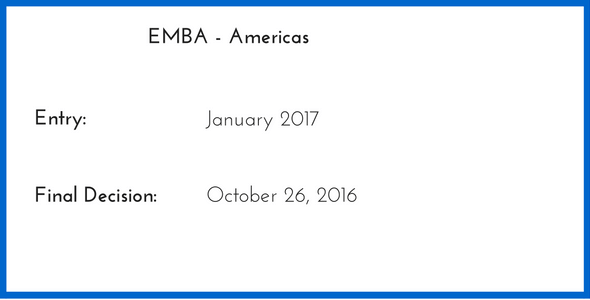
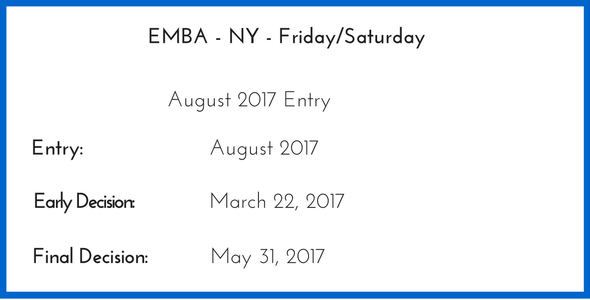
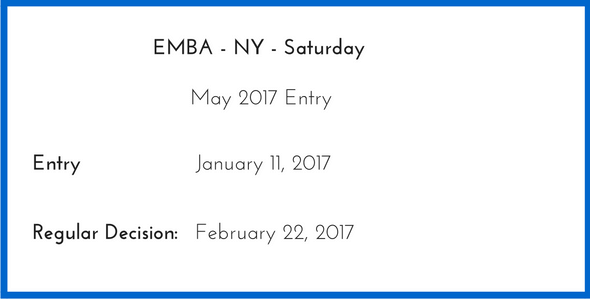
***Disclaimer: Information is subject to change. Please check with individual programs to verify the essay questions, instructions and deadlines.***

 By Cindy Tokumitsu, co-author of The EMBA Edge, and author of the free guide, Ace the EMBA. Cindy has helped MBA applicants get accepted to top EMBA programs around the world. She is delighted to help you too – click here to get in touch!
Related Resources:
• Best MBA Programs: A Guide to Selecting the Right One
• 5 Key Qualifying Factors the EMBA Adcoms Look For
• 3 Key Ways to Stand Out Through Your EMBA Essays
The post Columbia 2016-17 Executive MBA Essay Tips & Deadlines appeared first on Accepted Admissions Blog.
from Accepted Admissions Blog
http://blog.accepted.com/2016/08/28/columbia-2016-17-executive-mba-essay-tips-deadlines/

No comments:
Post a Comment